


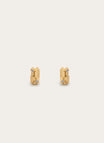
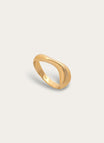
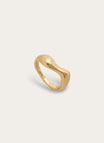
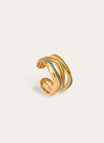
Une bague parfaitement ajustée fait toute la différence entre un bijou que vous portez quotidiennement et un bijou qui reste dans son écrin. Trop serrée, elle comprime le doigt et devient inconfortable après quelques heures. Trop lâche, elle tourne, glisse, risque d'être perdue. Chez AEREA, un studio de design spécialisé dans la création de bijoux contemporains, nous guidons régulièrement nos clients pour identifier leur taille de bague avec précision. Ce guide explique comment connaître correctement votre taille de bague pour commander une bague en ligne en toute confiance.
Pourquoi la taille de la bague est cruciale
Confort et port quotidien
Une bague confortable se fait oublier. Vous ne devez jamais ressentir de pression constante, d'inconfort en fermant votre main, ou de frottement irritant. C'est cette absence de sensation qui permet de la porter quotidiennement sans y penser.
Inversement, une bague mal ajustée crée une présence désagréable constante. Vous la tournez mécaniquement, l'enlevez régulièrement pour soulager le doigt, évitez de la porter certains jours. Ce malaise finit par transformer un bijou précieux en objet négligé.
Sécurité et risque de perte
Une bague trop lâche présente un réel risque de perte. Les mains gonflent et se dégonflent légèrement selon la température, l'activité physique, la rétention d'eau. Une bague qui glisse facilement sur le doigt par temps froid risque de tomber sans que vous ne le remarquiez.
Les bijoux AEREA sont conçus pour durer des décennies. Perdre un bijou à cause d'un mauvais ajustement serait tragique – c'est pourquoi il est essentiel de mesurer correctement la taille de la bague.
Esthétique de la main
Une bague bien ajustée met en valeur la main. Elle suit les proportions naturelles du doigt, crée une continuité visuelle harmonieuse. Une bague trop lâche semble disproportionnée, trop petite déforme le doigt par compression.
Méthodes pour mesurer votre taille de bague
Méthode 1 : Mesurer une bague existante
C'est la méthode la plus précise si vous possédez déjà une bague qui vous va parfaitement sur le doigt concerné.
Équipement nécessaire : Une règle graduée en millimètres, la bague à mesurer.
Procédure:
- Placez la bague à plat sur une surface
- Mesurez le diamètre intérieur de la bague en millimètres (la distance d'un bord intérieur à l'autre en passant par le centre)
- Référez-vous à notre tableau de correspondance des tailles
Important : Mesurez plusieurs bagues différentes si possible. Les tailles peuvent varier légèrement entre les doigts, et même entre les mains gauche et droite.
Piège à éviter : Ne mesurez pas le diamètre extérieur de la bague. Seul le diamètre intérieur compte pour déterminer la taille.
Méthode 2 : Circonférence du doigt avec un ruban à mesurer
Si vous n'avez pas de bague de référence, mesurer la circonférence du doigt directement est la méthode la plus accessible.
Équipement nécessaire : Un ruban à mesurer flexible (ou une bande de papier et une règle).
Procédure avec un ruban à mesurer:
- Enroulez le ruban autour de la base du doigt concerné (où vous porterez la bague)
- Le ruban doit être ajusté mais pas trop serré – il doit pouvoir glisser légèrement
- Notez la mesure en millimètres où le ruban se rencontre
- Cette mesure est la circonférence de votre doigt
- Divisez cette circonférence par π (3,14) pour obtenir le diamètre
- Référez-vous au tableau de correspondance des tailles
Procédure avec du papier:
- Coupez une bande de papier d'environ 1 cm de large et 10 cm de long
- Enroulez-le autour de la base du doigt
- Marquez où le papier croise avec un stylo
- Déroulez et mesurez la distance du début à la marque avec une règle
- Suivez la même procédure de calcul qu'avec un ruban
Conseil crucial : Le papier ne doit pas être trop serré. Vous devez pouvoir le tourner légèrement autour du doigt. Une bague doit pouvoir passer le joint du doigt tout en restant stable une fois en place.
Méthode 3 : Baguier professionnel
La méthode la plus précise consiste à utiliser un baguier – cet ensemble d'anneaux d'échantillon que tous les bijoutiers possèdent.
Où se faire mesurer:
- Chez un bijoutier local (service généralement gratuit)
- Dans une bijouterie de centre commercial
- Certaines grands magasins avec section bijouterie
Avantages : Précision absolue, possibilité d'essayer plusieurs tailles pour trouver le confort optimal.
Important : Si vous envisagez cette option, faites-vous mesurer à différents moments de la journée. Les doigts gonflent légèrement à la fin de la journée et par temps chaud.
Tableau des tailles de bague
Correspondance internationale
| Diamètre (mm) | Circonférence (mm) | Taille FR | Taille UK | Taille US |
|---|---|---|---|---|
| 14.9 | 46.8 | 46 | G | 3.5 |
| 15.3 | 48.0 | 48 | H½ | 4.5 |
| 15.7 | 49.3 | 50 | J | 5 |
| 16.1 | 50.6 | 52 | L | 6 |
| 16.5 | 51.9 | 54 | M½ | 6.5 |
| 16.9 | 53.1 | 56 | N½ | 7.5 |
| 17.3 | 54.4 | 58 | P | 8 |
| 17.7 | 55.6 | 60 | Q½ | 9 |
| 18.1 | 56.9 | 62 | S | 9.5 |
Taille de bague pour femmes : Moyennes courantes
Index et majeur : Généralement entre 52 et 58 (tailles FR) Annulaire : Généralement entre 50 et 56 Petit doigt : Généralement entre 46 et 50
Ces moyennes varient considérablement selon la morphologie. Ne vous fiez jamais uniquement aux moyennes – mesurez toujours votre doigt spécifique.
Taille de bague pour hommes : Moyennes courantes
Index et majeur : Généralement entre 60 et 68 Annulaire : Généralement entre 58 et 66 Petit doigt : Généralement entre 52 et 58
Les hommes ont tendance à préférer des bagues légèrement plus amples que les femmes, laissant un peu plus d'espace de mouvement.
Facteurs influençant la taille
Variations selon l'heure de la journée
Vos doigts ne sont pas exactement de la même taille tout au long de la journée. Ils gonflent légèrement à la fin de la journée, après un exercice physique, ou par temps chaud. Ils sont plus fins au réveil le matin ou par temps froid.
Conseil : Mesurez votre doigt à différents moments et prenez une moyenne. Si vous hésitez entre deux tailles, privilégiez la plus grande – vous pouvez toujours ajuster une bague légèrement trop lâche, mais une bague trop serrée ne peut être agrandie que dans des limites très restreintes.
Température extérieure
La chaleur dilate les vaisseaux sanguins, faisant légèrement gonfler les doigts. Le froid les contracte. Si vous vivez dans un climat variable, tenez compte de ces fluctuations.
Une bague qui semble parfaite en été peut devenir trop lâche en hiver, et vice versa. Visez un ajustement qui fonctionne dans les deux extrêmes.
Largeur de la bague
Plus une bague est large, plus elle doit être ample. Une fine bague de 2 mm peut être portée assez ajustée. Une large bague de 8 mm nécessite généralement une demi-taille ou même une taille entière au-dessus pour être confortable.
Cela s'explique par la surface de contact : une large bague couvre plus de surface du doigt et doit pouvoir bouger légèrement pour ne pas comprimer.
Forme de l'articulation
Certaines personnes ont des articulations plus proéminentes que la base du doigt. Dans ce cas, la bague doit être suffisamment large pour passer l'articulation, même si cela signifie qu'elle bouge légèrement une fois en place.
Solution : Les bagues ajustables ou les bagues avec système à ressort sont idéales pour cette morphologie.
Conseils pour commander une bague en ligne
Si vous connaissez votre taille exacte
Commandez en toute confiance. Vérifiez simplement que le site utilise le système de taille que vous connaissez (FR, UK, US). Chez AEREA, nous indiquons clairement les correspondances internationales pour chaque bague.
Si vous hésitez entre deux tailles
Conseil : prenez la taille au-dessus si vous êtes entre deux tailles. Il est plus facile de vivre avec une bague légèrement trop lâche qu'avec une bague qui comprime. De plus, les bijoutiers peuvent généralement réduire une bague d'une demi-taille à une taille entière, mais l'agrandissement est plus limité et parfois impossible selon le design.
Si vous ne connaissez pas du tout votre taille
Avant de commander, prenez le temps de vous faire mesurer par un professionnel ou de mesurer soigneusement avec les méthodes décrites ci-dessus. Commander "au hasard" garantit presque toujours une déception.
Certaines maisons comme AEREA offrent des services d'ajustement après achat. Vérifiez cette politique avant de commander.
Pour offrir une bague
Si vous souhaitez offrir une bague sans connaître la taille de la personne, plusieurs options sont disponibles :
Option 1 : Empruntez discrètement une bague qu'elle porte déjà sur le bon doigt et faites-la mesurer par un bijoutier.
Option 2 : Offrez un bon cadeau permettant à la personne de choisir sa taille elle-même après avoir reçu le présent.
Option 3 : Choisissez une bague ajustable qui s'adapte à plusieurs tailles.
Option 4 : Commandez une taille moyenne (54 pour les femmes, 62 pour les hommes) et prévoyez un ajustement ultérieur.
Bague ajustée vs Bague confortable
Qu'est-ce qu'une bague ajustée ?
Une bague ajustée glisse sur le doigt avec une légère résistance mais passe le joint sans forcer. Une fois en place, elle ne tourne pas librement mais peut être repositionnée avec une légère pression. Vous pouvez l'enlever facilement mais elle ne glisse pas toute seule.
C'est l'ajustement idéal pour les bagues fines et les bagues de fiançailles que vous ne souhaitez pas voir tourner.
Qu'est-ce qu'une bague confortable ?
Une bague confortable passe facilement le joint et peut tourner légèrement à la base du doigt. Elle ne glisse pas pour tomber, mais offre plus de liberté de mouvement.
Cet ajustement convient aux bagues larges, aux bagues portées occasionnellement, ou si vous préférez moins de contact avec la peau.
Quelle option choisir ?
Cela dépend de vos préférences personnelles et du type de bague.
Bague ajustée si:
- Vous portez la bague quotidiennement et souhaitez qu'elle reste en place
- C'est une bague avec un élément directionnel (pierre, motif) que vous souhaitez garder orienté
- Vous avez tendance à jouer avec vos bijoux (une bague tournante peut être ennuyeuse)
Bague confortable si:
- C'est une large bague (plus de 5 mm)
- Vous vivez dans un climat très variable (chaud en été, froid en hiver)
- Vous préférez retirer facilement votre bague plusieurs fois par jour
- Vos doigts gonflent facilement
Guide des Tailles de Bague Selon le Doigt
Annulaire Gauche
C'est traditionnellement le doigt pour l'alliance et la bague de fiançailles. Pour ces bagues symboliques portées quotidiennement, privilégiez un ajustement parfait – ni trop serré ni trop lâche.
Mesurez ce doigt spécifiquement plusieurs fois à différents moments. C'est un investissement émotionnel et financier significatif qui mérite cette attention.
Index
L'index est souvent légèrement plus large que l'annulaire. C'est un doigt mobile qui participe à de nombreux gestes quotidiens. Une bague sur l'index peut être légèrement plus ample pour ne pas entraver les mouvements.
Doigt du Milieu
L'index est généralement le doigt le plus large de la main. Les bagues d'affirmation – imposantes et sculpturales – sont souvent portées sur ce doigt. Assurez-vous d'avoir suffisamment d'espace pour que la bague ne comprime pas, surtout si elle est large.
Auriculaire
Le plus fin des doigts. Les bagues pour l'auriculaire sont souvent fines et délicates. Attention à la précision de la taille : la moindre erreur est plus visible sur ce petit doigt.
Pouce
Porter une bague au pouce est une tendance contemporaine. Le pouce nécessite généralement des tailles entre 56 et 62 (FR) selon la morphologie. La bague doit pouvoir passer facilement l'articulation car le pouce bouge constamment.
Entretien et Ajustement Post-Achat
Quand faire ajuster une bague
Si votre bague devient inconfortable après quelques semaines de port, consultez un bijoutier. Les variations de poids corporel, la rétention d'eau due à certaines conditions médicales, ou simplement un ajustement initial imparfait peuvent nécessiter une modification.
Chez AEREA, nous offrons un service d'ajustement dans les 30 jours suivant l'achat. Cette garantie vous permet de commander en toute confiance, sachant que le réajustement est possible si nécessaire.
Limites d'Ajustement
Toutes les bagues ne peuvent pas être redimensionnées. Les bagues en acier inoxydable, en tungstène, ou certains designs complexes avec des pierres tout autour ne peuvent pas être modifiés. Vérifiez cette information avant d'acheter.
Pour les bagues ajustables, l'agrandissement ou la réduction sont généralement possibles d'une à deux tailles maximum sans compromettre l'intégrité structurelle.
La Philosophie AEREA
Chez AEREA, nous concevons des bagues destinées à être portées quotidiennement pendant des décennies. Cette longévité exige un ajustement parfait dès le départ.
Nos bagues contemporaines en argent recyclé et en plaqué or bénéficient de finitions soignées qui glissent confortablement sur le doigt. Nous proposons une large gamme de tailles pour s'adapter à toutes les morphologies, et notre service client vous guide personnellement pour identifier votre taille exacte si nécessaire.
Mesurer correctement votre taille de bague n'est pas une formalité – c'est la condition essentielle pour que ce bijou devienne une partie intégrante de votre vie quotidienne. Un bijou qui reste dans son écrin à cause d'un inconfort est un bijou qui ne remplit pas sa fonction d'embellir et d'accompagner votre vie.
Prenez le temps nécessaire pour cette mesure. Consultez notre guide des tailles, utilisez nos outils de mesure, contactez-nous en cas de doute. Cette attention initiale garantit des années de port confortable et de plaisir esthétique quotidien.