



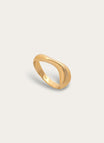
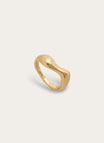
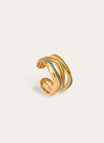
Jewelry embellishes, expresses your style, carries emotional meanings. But it's also in permanent contact with your skin, your lymphatic system, sometimes even with wounds or sensitive zones. This intimate contact means your jewelry's quality and composition directly influence your skin health. At AEREA, a design studio specializing in creating contemporary jewelry, we favor materials that respect both your aesthetics and your physical wellbeing. This guide explores the relationship between jewelry and health, and helps you make choices that protect your skin.
The Skin: A Permeable Barrier
Understanding Skin and Absorption
Your skin isn't an impermeable barrier. It's a living organ, your body's largest, that breathes, excretes, and absorbs. Sufficiently small molecules can cross skin layers and enter bloodstream.
Metals in prolonged skin contact can release metallic ions, particularly in presence of perspiration (which is slightly acidic) or friction. These ions can penetrate skin and provoke local reactions or, in certain cases, systemic ones.
This physiological reality means jewelry isn't simple inert ornaments – they interact chemically with your body. Material quality thus becomes a health question, not merely aesthetic.
Particularly Sensitive Zones
Pierced ears: Skin in the piercing canal is thinner and more permeable. Earrings are in direct contact with blood vessels close to the surface.
Neck: Zone with thin skin and important lymphatic glands. A necklace that constantly rests on this zone exposes sensitive skin surface.
Wrists: Thin skin with blood circulation close to the surface. Bracelets also constantly rub, increasing potential irritation.
Fingers: Rings create occlusion – they trap perspiration and residue between metal and skin, increasing exposure to released metals.
Jewelry Allergy: Understanding Skin Reactions
Nickel Allergy: Public Enemy Number One
Nickel is responsible for 80% of jewelry-related allergies. It's an omnipresent metal – in stainless steel, certain white golds, copper alloys, and practically all cheap jewelry.
How does nickel allergy manifest?
- Redness and itching at contact point
- Vesicles (small blisters) filled with fluid
- Dry, flaky, cracked skin
- Oozing and crusts in severe cases
- In extreme cases, eczema extending beyond contact zone
The progressive development trap: You can wear jewelry for months or years without problem, then suddenly develop a reaction. Once nickel allergy develops, it's permanent and can worsen with repeated exposures.
Cross-sensitization: Nickel allergy can sensitize your immune system to other metals – cobalt, chromium, palladium. This can progressively make wearing many jewelry types difficult.
Other Problematic Heavy Metals
Lead: Fortunately rare in modern jewelry due to regulations, but still present in certain cheap imported jewelry. Lead is neurotoxic – even low exposures can affect cognition, particularly in children.
Cadmium: Sometimes used for brilliant golden finishes in very low-quality jewelry. Toxic to kidneys and bones.
Chromium: Present in certain alloys, can provoke dermatitis similar to nickel.
Contact Dermatitis: Irritation Reaction
Distinct from allergy, irritant contact dermatitis results from friction, occlusion (perspiration entrapment), or direct chemical reaction without immune system involvement.
Manifestations:
- Reddened and inflamed skin
- Burning sensation rather than itching
- Dryness and fissures
- Skin darkening (particularly with copper)
This reaction can occur even with non-allergenic metals if jewelry is worn constantly without appropriate cleaning, trapping bacteria and residue.
Hypoallergenic Jewelry: Selection Criteria
Truly Hypoallergenic Materials
925 sterling silver: One of the safest metals for sensitive skin. Pure silver is practically non-allergenic; the 7.5% copper alloy rarely provokes reactions if quality is good.
All AEREA silver jewelry uses exclusively RJC-certified recycled silver, guaranteeing controlled composition and absence of contaminant metals.
18-carat gold and above: High gold content (75% or more) drastically limits allergenic metals presence. Pure gold itself never provokes allergic reactions.
Caution with white gold: Often alloyed with nickel to obtain white color. Favor white gold alloyed with palladium, more expensive but non-allergenic.
Titanium: Ultra-light metal, extremely resistant, and practically never responsible for allergies. Used in surgery and medical implants. Its disadvantage: difficult to work, therefore limited design options and high price.
Niobium: Similar to titanium. Medical standard for body piercing. Practically impossible to develop niobium allergy.
Platinum: The most hypoallergenic metal, but also most expensive. Generally reserved for high-end wedding bands and engagement rings.
Materials to Absolutely Avoid
Cheap costume jewelry: Almost systematically contains nickel, sometimes lead or cadmium. Superficial plating (often less than 0.1 micron) degrades in a few weeks, directly exposing toxic base metals.
"Surgical steel" or 316L stainless steel: Despite its reassuring name, contains 10-14% nickel. Can be tolerated by some people with mild allergies, but should be avoided if you're nickel-sensitive.
Unspecified alloys: If jewelry doesn't clearly indicate its composition, it's generally a bad sign. Quality jewelry manufacturers are proud of their composition and communicate it transparently.
Warning Signs: When Your Jewelry Becomes Toxic
Immediate Skin Symptoms
Green skin coloration: Indicates a reaction with copper. Copper sulfate formed by reaction with perspiration colors the skin. It's not dangerous but signals poor-quality jewelry or degraded plating.
Blackened skin: Can indicate a reaction with silver (normal oxidation) or with other metals. If accompanied by irritation, it's concerning.
Itching: First sign of allergy or irritation. Don't ignore it – continuing to wear the jewelry can worsen sensitization.
Localized redness: Clear inflammation at exact jewelry contact point. Distinguish from diffuse redness that may have other causes.
Longer-Term Symptoms
Skin thickening: Skin at contact point becomes thicker, leathery. It's a protection reaction against chronic irritation.
Hyperpigmentation: The zone remains darker even after stopping jewelry wear. Can be permanent in severe cases.
Chronic eczema: Untreated allergy can evolve toward persistent eczema requiring dermatological treatment.
Symptom extension: Allergy can start locally then extend to other body parts, even without direct jewelry contact.
When to Consult a Dermatologist
- Skin reaction persisting more than 48h after stopping wear
- Vesicles, oozing, or crusts
- Significant pain at contact point
- Reaction extension beyond contact zone
- Infection signs (heat, pus, fever)
- Repeated reactions with different jewelry
A dermatologist can perform patch tests to precisely identify your metallic allergens. This knowledge is valuable for guiding your future jewelry purchases.
Quality Jewelry: Investment for Your Health
Why Quality Really Matters
Quality jewelry uses noble, pure, traceable metals. The price difference between costume jewelry and quality jewelry directly reflects this composition difference.
Costume jewelry (€5-20):
- Unspecified metallic alloys
- Ultra-thin plating (<0.1 micron) disappearing in weeks
- Frequent presence of nickel, sometimes lead or cadmium
- No quality control or traceability
Quality jewelry (€50-200+):
- Noble metals clearly identified (925 silver, 18K gold, etc.)
- Thick plating (2.5+ microns) if applicable
- Compliance with strict European regulations on heavy metals
- Complete supply chain traceability
The cost difference is justified by actual metallic composition. Silver, even recycled, has intrinsic value. Thick plating requires more material and time. This quality directly translates to superior health safety.
The True Cost of Toxic Jewelry
Cheap costume jewelry seems economical, but:
Health costs:
- Dermatological consultations (€50-100)
- Topical treatments (€15-50)
- Potentially allergy tests (€100-300)
- Work downtime if severe reaction
- Sometimes permanent skin damage
Hidden costs:
- Frequent replacement (plating degrades rapidly)
- Cannot be worn daily without risk
- Loss if jewelry falls (poor-quality clasps)
- No resale value
Quality jewelry costs more initially but pays for itself through longevity, safety, and preserved value.
Good Practices for Wearing Jewelry Healthily
Jewelry Hygiene
Regular cleaning: Jewelry accumulates perspiration, dead skin, cosmetics, bacteria. Clean your jewelry at minimum once weekly:
- Silver: warm soapy water + soft brush
- Gold: same, abundant rinsing
- Gold plating: dry soft cloth only
Complete drying: Never put jewelry back on still damp. Moisture trapped between metal and skin favors irritations and infections.
Occasional disinfection: Particularly for earrings. Use 70% isopropyl alcohol or jewelry cleaning solution. Rinse and dry completely.
When to Remove Your Jewelry
Always:
- Before shower, bath, pool (aggressive chlorine)
- Before physical exercise (excessive perspiration)
- Before sleeping (allows skin to breathe)
- Before applying creams, lotions, perfumes
- Before housework (chemicals)
Special ring advice: Remove your rings when washing hands. Moisture trapped under ring favors bacterial proliferation and skin irritation.
Jewelry Rotation
Don't constantly wear the same jewelry at the same place. Alternate your pieces to allow your skin to breathe and regenerate. This rotation drastically reduces chronic irritation reaction risk.
Piercing Caution
New piercings require hypoallergenic medical jewelry (titanium or niobium) during the entire healing phase (6-12 weeks minimum). Never replace these medical jewelry with costume jewelry, even after complete healing.
European Regulation: Your Legal Protections
REACH Regulation on Nickel
Since 2009, the European Union strictly limits nickel release by jewelry:
- Maximum 0.5 μg/cm²/week for jewelry in prolonged skin contact
- Maximum 0.2 μg/cm²/week for piercing posts
These limits protect the majority of people, even those with moderate nickel sensitivity. All jewelry legally sold in EU must respect these standards.
Restriction on Lead and Cadmium
Lead is prohibited in jewelry at more than 0.05% of weight. Cadmium is limited to 0.01% in components in skin contact.
These regulations mean jewelry purchased from established European brands respects strict health standards. Beware jewelry of unknown origin or purchased on platforms without quality control.
The AEREA Philosophy
At AEREA, we consider creating jewelry a responsibility that goes beyond aesthetics. Each piece we design will be worn directly on skin, sometimes daily for years. This physical intimacy demands absolute integrity in material choice.
All our silver jewelry uses RJC-certified recycled silver, whose purity is controlled and guaranteed. Our gold plating benefits from 2.5 to 3 micron plating – six times thicker than industry standard – creating durable barrier between your skin and base metal.
We clearly indicate each jewelry piece's composition. No vague mentions like "metallic alloy" or "golden metal". You know exactly what you wear on your skin.
This transparency is inseparable from our ethical commitment. Truly responsible jewelry cannot ignore its health dimension. We refuse to create objects beautiful but toxic, aesthetic but allergenic.
Choosing AEREA jewelry means choosing peace of mind. You know the jewelry resting on your skin respects the highest standards of safety, purity, and quality. It's recognizing that your health and your beauty aren't contradictory – they're complementary.
Jewelry that irritates your skin can never be beautiful, whatever its design. True beauty begins with respect for your body.