


Materials carry memory. In design, they record origin, transformation, and use. At AEREA Studio, recycled materials are not a compromise — they are an opportunity to extend the life of matter through intention, precision, and form.
Beyond First Use
Recycled materials begin with a previous function. Rather than erasing this history, we consider it part of the design process. Each transformation adds a layer of meaning, shifting material from utility to object, from waste to resource.
Design becomes a tool to reassign value.
Designing with Constraint
Working with recycled materials requires restraint. Variations in texture, colour, and consistency are inherent. These constraints inform geometry and surface treatment, guiding decisions rather than limiting them.
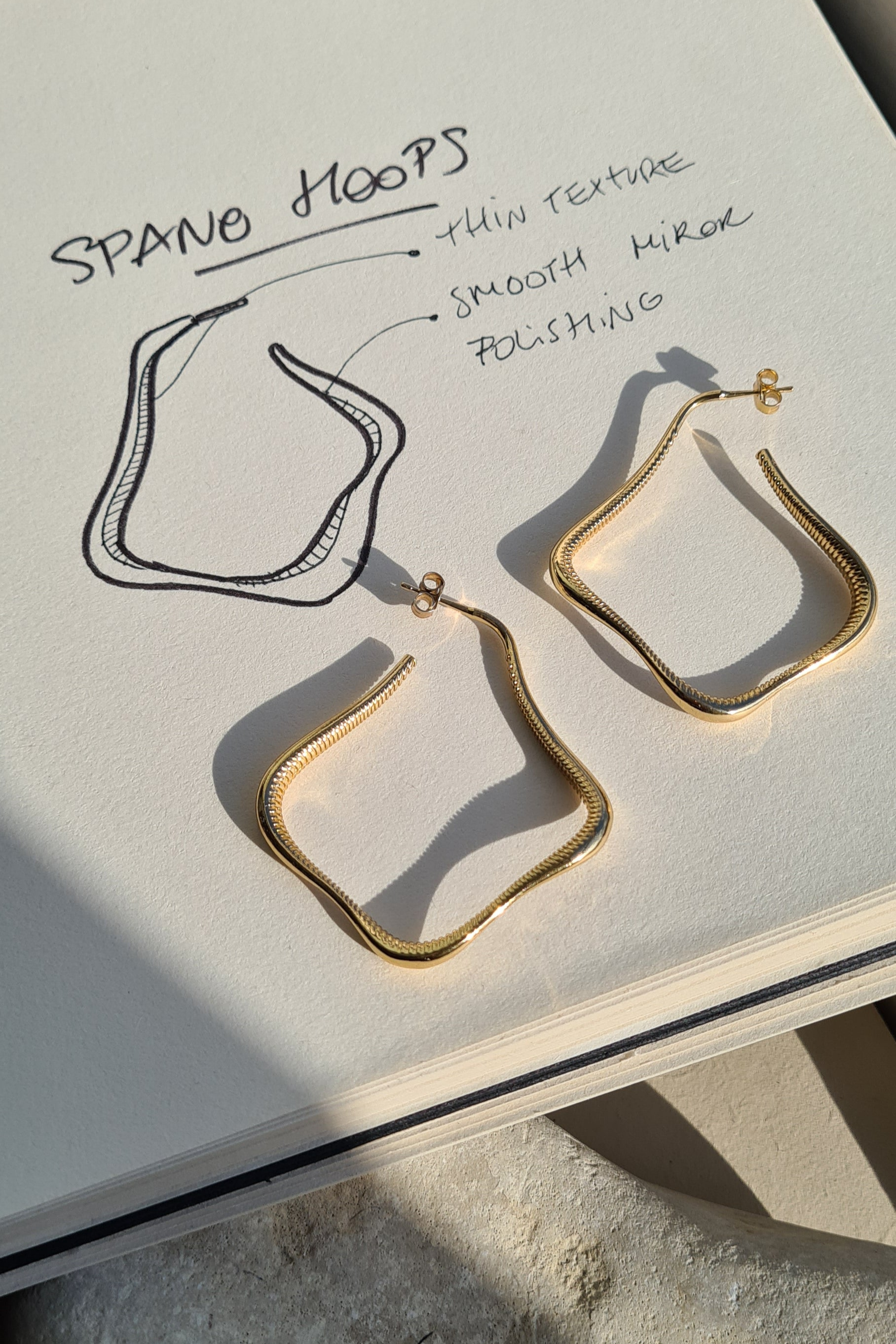
Through 3D design and digital modelling, we adapt forms to material behaviour, ensuring stability, durability, and coherence.
Digital Tools, Circular Thinking
3D design allows us to simulate and optimise before production begins. Objects are conceived with their entire lifecycle in mind — from sourcing to use, and potential reuse.
This foresight reduces waste and supports a circular design logic, where materials are kept in circulation rather than discarded.
Multiple Lives Through Additive Manufacturing
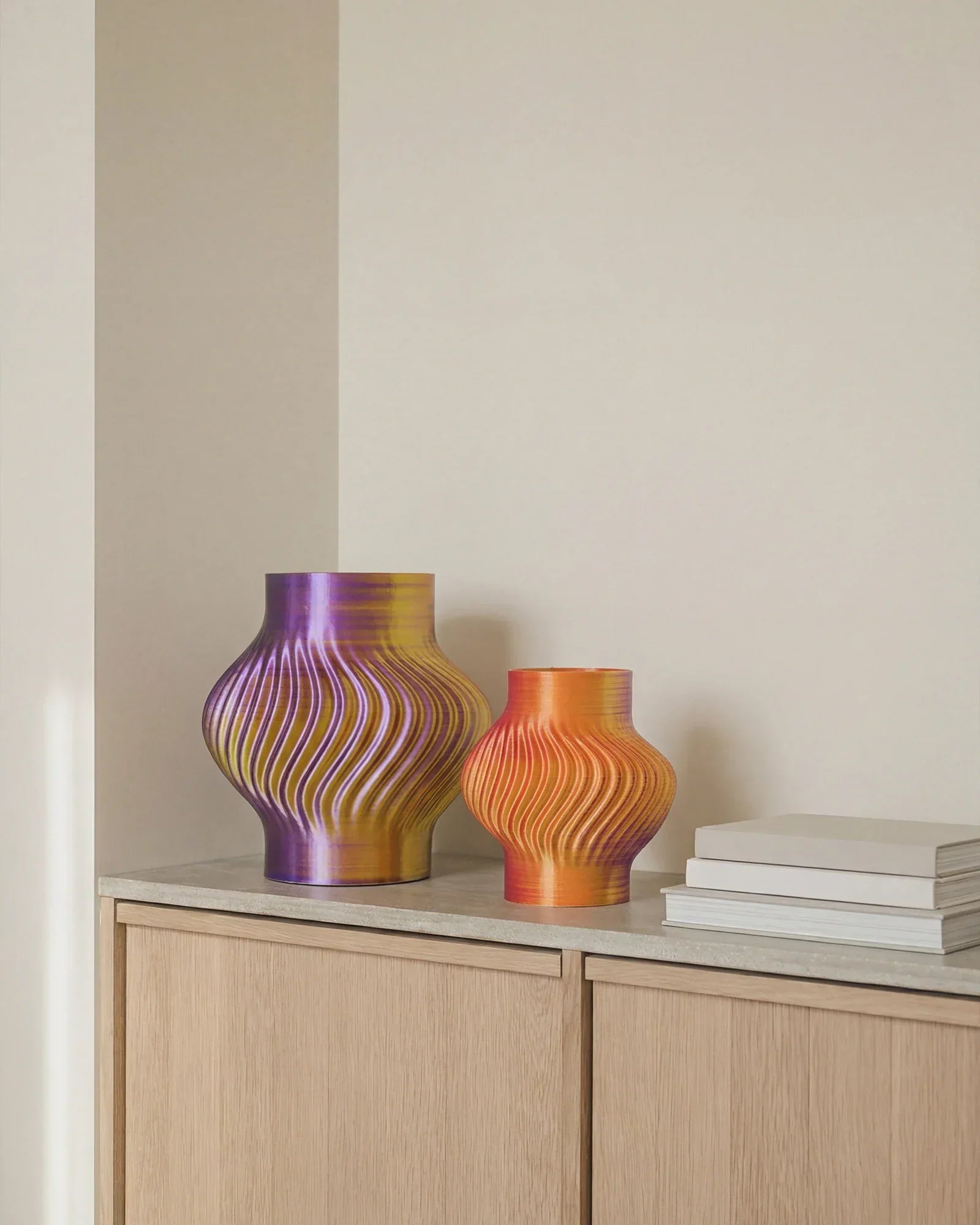
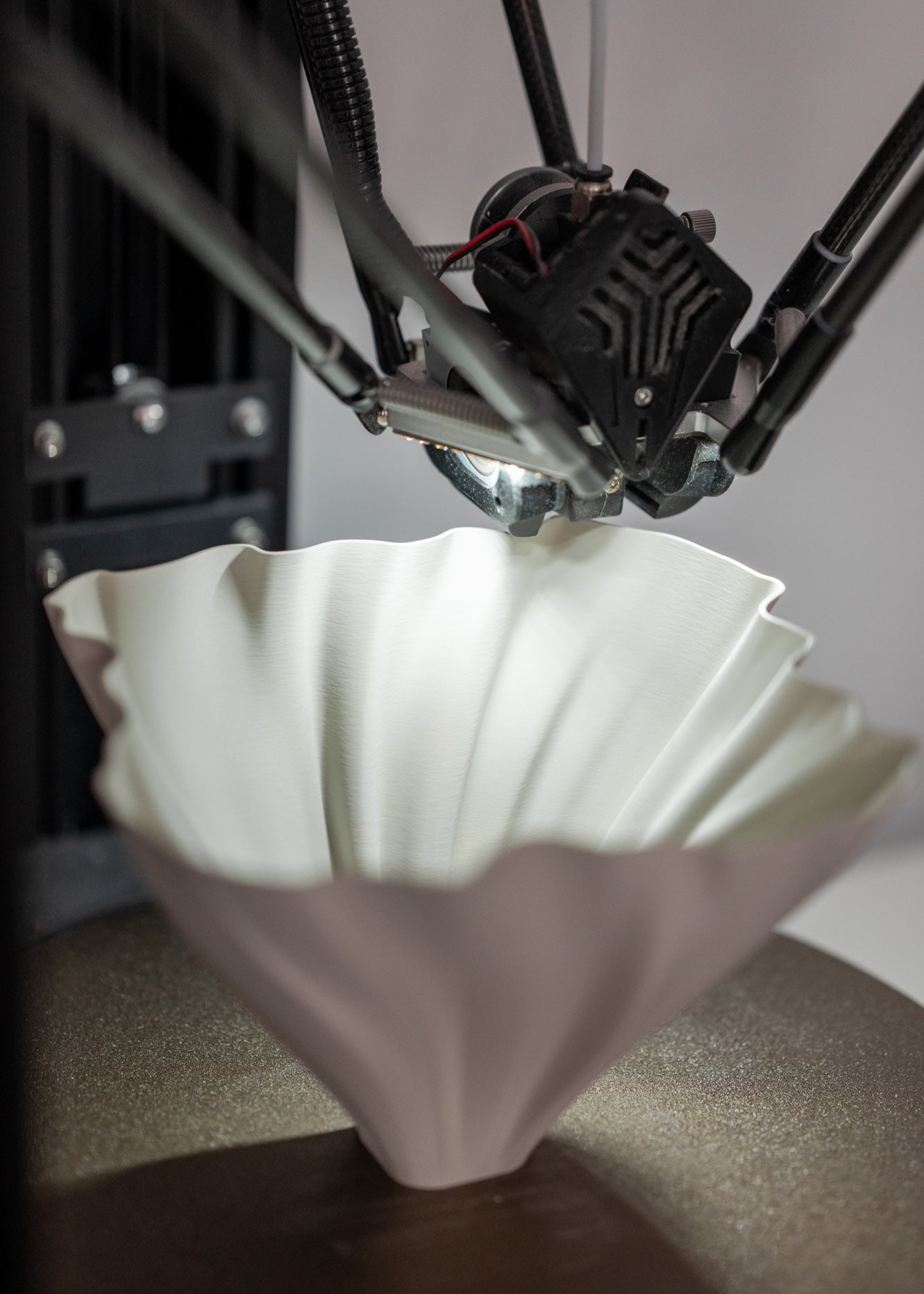
Additive manufacturing is particularly suited to recycled materials. It enables precise material placement, minimal waste, and local production. Objects are built layer by layer, giving form to material that might otherwise be lost.
Each piece becomes a new chapter — not an endpoint.
Longevity Over Replacement
Recycled materials challenge the idea of disposability. By designing objects meant to last, we extend the value of the material beyond its origin. Durability, repairability, and relevance are prioritised over speed or trend.
An object’s second life should be longer than its first.
A Responsible Aesthetic
The presence of recycled material is not hidden. Subtle variations and surface nuances are embraced as signs of transformation. They speak of process, origin, and continuity.
Sustainability, here, is visible — not symbolic.
Designing Continuity
Recycled materials demand continuity of thought. Design must anticipate not only how an object is made, but how it may evolve. In this way, objects are never final — they remain part of an ongoing system.
Multiple lives are not an exception. They are the intention.