


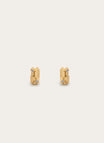
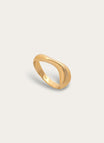
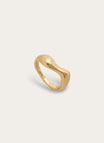
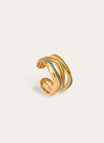
The term "digital craftsmanship" may seem paradoxical at first. How can digital technology coexist with the notion of craftsmanship, traditionally associated with manual work and know-how transmitted from generation to generation? At AEREA, a contemporary design studio, we consider digital craftsmanship as the natural evolution of artistic trades facing the possibilities offered by digital fabrication. It's the meeting between technical excellence, creative intention, and 21st-century tools.
The Fusion of Know-How and Technology
Tradition Meets Innovation
Digital craftsmanship doesn't replace traditional techniques – it augments them. Just as a cabinetmaker masters their tools to reveal the beauty of wood, a contemporary creator masters parametric design software, 3D printers, and digital fabrication technologies to materialize their vision.
Know-how remains central: understanding materials, anticipating matter's behavior during production, refining finishes, controlling quality. What changes are the tools and formal possibilities. 3D printing, laser cutting, algorithmic modeling become our chisels, lathes, and looms.
This approach allows creating design objects impossible to realize manually: complex organic structures, mathematically generated textures, forms that evolve fluidly without visible break or junction. Technology becomes a brush allowing us to paint with matter itself.
Total Creative Control
In traditional craftsmanship, the creator controls every stage of the creative process. Digital craftsmanship offers the same level of mastery, but with exponentially vaster possibilities. As a design studio, we control the process from initial concept to finished object.
We program the algorithms that generate our forms. We calibrate the machines that materialize our designs. We develop our own post-processing techniques. This end-to-end mastery guarantees that each AEREA design object carries our aesthetic signature and meets our quality requirements.
Digital design also allows us to iterate rapidly. We can explore dozens of variations of the same form, adjust parameters with millimetric precision, simulate light behavior on a surface before even fabricating it. This experimentation capacity accelerates creative research without compromising artisanal rigor.
Advantages for Contemporary Design
Local and Responsible Production
Digital craftsmanship naturally favors local production. Unlike industrial manufacturing that requires heavy infrastructure and mass production to be profitable, digital fabrication is economically viable at small scale.
Our studio produces locally, close to our clients, eliminating long international transport. Each piece is fabricated on order or in micro-series, drastically reducing waste associated with dormant stock. This approach inscribes itself in a sustainable design economy where value resides in creative reflection and execution excellence, not in volume produced.
Local production also allows us to maintain direct relationships with our clients. We're not separated by intermediaries, oceans, or warehouses. This direct link nourishes our understanding of needs, inspires our creations, and creates an authentic relationship between creator and user.
Unique Design Objects
Digital craftsmanship resolves an apparent contradiction: how to produce manufactured objects that retain the unique character of artisanal pieces? The answer lies in digital fabrication's flexibility.
Each object can be a subtle variation of the same concept. We can modify proportions, adjust textures, customize dimensions without requiring costly new molds or major production reconfiguration. This capacity transforms each order into a semi-unique piece, adapted to its future owner's specific context.
Our design objects also carry traces of the digital creation process: print striations that capture light, algorithmic transitions between surfaces, details impossible to mold. These markers become an aesthetic signature, a formal language specific to digital craftsmanship.
Durability and Quality
Contrary to the received idea that digital produces ephemeral, digital craftsmanship can create objects of exceptional durability. The materials we select – technical polymers, reinforced composites, high-quality bioplastics – are designed to span decades.
Digital fabrication precision also guarantees consistent quality. Each print layer is controlled, each dimension respects defined tolerances, each piece is identical to the original digital simulation. This technical reliability translates into objects that function perfectly and maintain their aesthetic integrity over time.
Sustainable design doesn't only concern materials and fabrication – it's also about creating objects that resist trends. Our creations don't seek to follow seasonal trends, but to propose a timeless aesthetic language anchored in formal exploration and execution quality.
Our Studio Approach
AEREA Creation Process
At AEREA, digital design always begins with intention. We don't master technology for itself, but to materialize concepts, to explore aesthetic territories, to create objects that dialogue with space and enrich daily life.
Our process integrates conceptual research, material experimentation, and technical refinement. We develop our own algorithmic tools to generate forms. We test different materials and finishing techniques. We iterate until the object perfectly embodies the initial intention.
This studio approach means we don't outsource creative reflection. Each AEREA design object is conceived, developed, and produced in-house. We control the complete creative value chain, guaranteeing aesthetic coherence and execution quality.
Contemporary Creator Vision
Being a contemporary creator in object design means accepting that tools evolve, possibilities expand, boundaries between disciplines dissolve. Digital craftsmanship isn't a betrayal of artisanal tradition – it's its logical extension in a world where digital is integral to our reality.
We consider ourselves 21st-century artisans. Our workshop contains 3D printers rather than pottery wheels, 3D modeling stations rather than carpentry workbenches. But the essence remains identical: transforming raw matter into meaningful objects, creating pieces that testify to technical mastery and aesthetic sensitivity.
This contemporary creator position allows us to explore uncharted territories. We create objects that couldn't have existed twenty years ago, forms that require algorithmic precision and digital calculation subtlety. It's this innovation capacity that makes the difference between reproducing and creating.
The Future of Design
Digital craftsmanship isn't a passing trend – it's a fundamental evolution in how objects are conceived and fabricated. As digital fabrication technologies become more accessible and sophisticated, the boundary between artisan and designer, between unique object and produced object, continues to redefine itself.
At AEREA, we consider this evolution as an extraordinary opportunity. It allows us to reconcile artisanal excellence and technological innovation, local production and global distribution, unique object and controlled reproducibility.
Our design objects aren't generic products from an anonymous fabrication chain. They're considered creations, produced with intention, bearing the digital fingerprint – literally and figuratively – of a design studio that believes in the fusion between craftsmanship and technology.
The future of design belongs to those who can master these new tools without losing sight of the essential: creating objects that enrich daily life, that carry meaning, that embody a coherent aesthetic vision. It's this conviction that guides each AEREA creation, each formal exploration, each object that leaves our studio to inhabit an interior.
Digital craftsmanship isn't the end of tradition – it's its natural evolution, its capacity to embrace the tools of its era while maintaining the excellence and intention that have defined artisanal work since always.